







Supporting someone with depression isn’t always easy. You may want to say the right thing or help them feel better, but knowing how to offer meaningful support can be challenging. Depression affects an estimated 21 million U.S. adults, making it one of the most common mental health conditions. It can impact every aspect of a person’s life, from their relationships and work to their physical health and daily routines.
While you can’t fix depression for someone else, your compassion, patience, and encouragement can make a meaningful difference. In this guide, we’ll share practical ways to support someone struggling with depression, common mistakes to avoid, and when to encourage professional help.
Understand What Depression Really Is
Before you can effectively support someone with depression, it’s important to understand what they’re experiencing. Depression is more than feeling sad or having a bad day. It is a common, treatable mental health condition that affects how a person thinks, feels, and functions in everyday life. According to the National Institute of Mental Health, major depression involves a depressed mood or loss of interest or pleasure in daily activities for at least two weeks. It can also include changes in sleep, appetite, energy, concentration, or self-worth.
Depression affects much more than a person’s emotions. The Centers for Disease Control and Prevention (CDC) reports that nearly 88% of adolescents and adults with depression experience difficulties with work, home responsibilities, or social activities because of their symptoms. Even routine tasks, such as getting out of bed, preparing meals, or responding to messages, can feel overwhelming.
It’s also important to remember that depression doesn’t look the same for everyone. Some people openly express their emotions, while others continue working, caring for their families, and meeting daily responsibilities while silently struggling. Understanding depression as a legitimate medical condition, rather than a personal weakness or lack of motivation, can reduce stigma. It can also help you respond with greater patience, empathy, and compassion.
Practical Ways to Support Someone Struggling With Depression
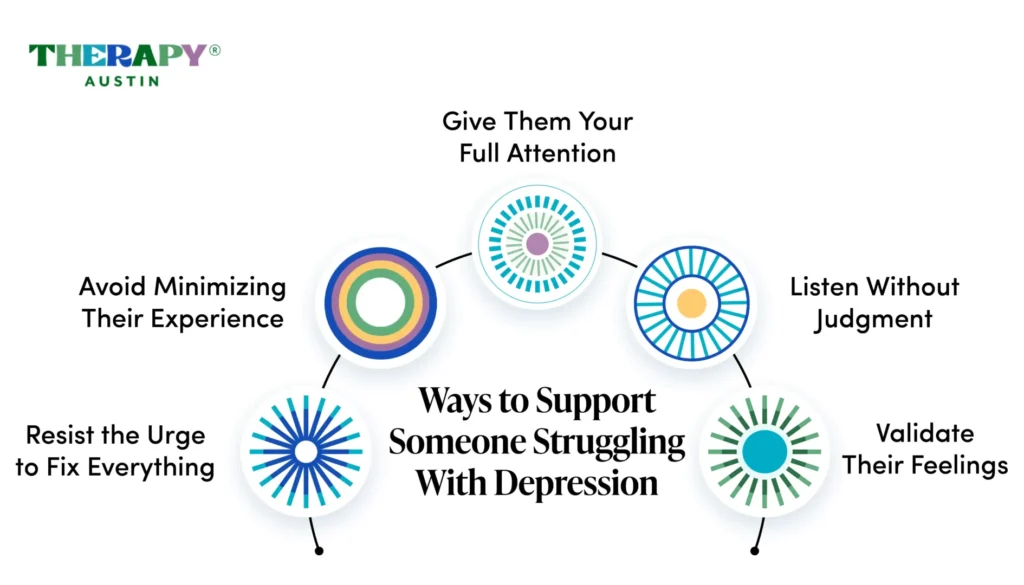
Supporting someone with depression isn’t about having all the right answers. It is about small, consistent acts of compassion that can make a meaningful difference in how supported they feel. While every person’s experience is unique, these practical strategies can help you provide encouragement, strengthen trust, and remind your loved one that they don’t have to face depression alone.
Listen Without Judgment
When someone is struggling with depression, they often need understanding more than advice. While it’s natural to want to make things better, trying to solve the problem right away can leave them feeling unheard. Instead, focus on creating a safe space where they feel comfortable sharing their thoughts and emotions without fear of judgment.
As they talk, give them your full attention and listen without interrupting. Acknowledge what they’re feeling with supportive responses such as:
- I’m here for you,
- That sounds really difficult, or
- Thank you for trusting me.
These simple words can help them feel seen, heard, and less alone, especially when they’re struggling with loneliness.
Likewise, avoid dismissive statements that may unintentionally minimize their experience. These are phrases such as:
- Just think positive,
- Everyone feels this way sometimes, or
- You’ll get over it
Dismissive phrases can make someone feel misunderstood, even when your intentions are good.
You don’t need to have all the answers. Your willingness to listen with patience, empathy, and compassion can be one of the most meaningful ways to support someone living with depression.
Give Them Your Full Attention
When someone opens up about their depression, be fully present. Put away distractions, maintain eye contact, and let them speak without interrupting. Instead of thinking about what to say next, focus on understanding what they’re sharing. Sometimes, simply listening with your full attention can provide more comfort than any advice you could offer.
Validate Their Feelings
You don’t have to fully understand someone’s experience to acknowledge that their emotions are real. Let them know their feelings matter and that it’s okay to talk about what they’re going through. Validation can help reduce feelings of isolation and build trust, especially for someone who may be feeling like a burden to the people they care about.
Supportive responses include:
- I’m here for you.
- That sounds really difficult.
- Thank you for trusting me with this.
- You don’t have to go through this alone.
Avoid Minimizing Their Experience
Even well-intentioned comments can unintentionally make someone feel dismissed. Try to avoid phrases like:
- Just cheer up,
- Look on the bright side, or
- Everyone goes through this sometimes.
While these statements are usually meant to encourage, they can make it seem as though their struggles aren’t being taken seriously.
Instead, respond with empathy, listen without judgment, and reassure them that you’re there whenever they need someone to talk to.
Resist the Urge to Fix Everything
It’s natural to want to make someone you care about feel better, but depression isn’t something that can be solved with a single conversation or the perfect piece of advice. Rather than trying to fix the problem, focus on offering steady support and encouragement. Your patience, compassion, and willingness to simply be there can make a meaningful difference as they work toward healing.
Encourage Them to Seek Professional Support
While your support can make a meaningful difference, depression often requires professional treatment. If someone you care about is struggling, gently encourage them to speak with a mental health professional. Rather than telling them they need therapy, express your concern with compassion and let them know you’re there to support them whenever they’re ready.
If they seem open to the idea, offer practical help to make the process feel less overwhelming. You could help them research therapists, check insurance coverage, schedule an appointment, or even offer to accompany them to their first visit. These small acts of support can make seeking help feel less intimidating.
It’s also important to normalize mental health treatment. Many people delay getting help because they worry about being judged or believe they should be able to handle depression on their own.
Remind your loved one that depression is a common, treatable mental health condition, and seeking depression therapy is a positive step toward recovery. With the right support, many people learn effective coping strategies, experience symptom relief, and improve their overall quality of life.
Final Thoughts
Supporting someone with depression isn’t about saying the perfect thing. It’s about showing up with patience, empathy, and consistency. While your support can make a meaningful difference, professional treatment is often an important part of recovery..
If someone you care about is struggling, encourage them to seek help and remind them they don’t have to face depression alone.