







Depression doesn’t always begin in adulthood. For many people, its roots lie in painful childhood experiences that were never fully processed or healed. Experiences such as abuse, neglect, the loss of a caregiver, or growing up in an unpredictable home can have lasting effects on emotional well-being and brain development. While not everyone who experiences childhood trauma develops depression, unresolved trauma can significantly increase the risk later in life.
But healing is possible. With the right support and evidence-based, trauma-informed therapy, people can process these experiences, manage depressive symptoms, and build healthier emotional patterns. In this guide, we’ll explore how childhood trauma and depression are connected, the signs that unresolved trauma may still be affecting your mental health, and the treatment approaches that can support long-term healing and recovery.
What Is Childhood Trauma?
Childhood trauma refers to distressing or overwhelming experiences that occur during childhood and have a lasting impact on a person’s emotional, psychological, or physical well-being. Because a child’s brain is still developing, traumatic experiences can influence how they respond to stress, regulate emotions, build relationships, and view themselves well into adulthood.
Understanding the Different Types of Childhood Trauma
Childhood trauma is often associated with a single, life-threatening event, but it can take many different forms. Some children experience single-event trauma, which results from one distressing incident, such as a serious accident, the sudden loss of a loved one, or a natural disaster. Although these experiences can be deeply upsetting, many children are able to recover with appropriate support.
Others experience complex trauma, which develops through repeated or ongoing exposure to stressful or harmful situations. This may include emotional neglect, chronic abuse, domestic violence, or growing up in an unstable or unpredictable home. Because complex trauma occurs over an extended period during critical stages of development, it can have a profound impact on a child’s emotional regulation, self-esteem, relationships, and overall mental health.
Trauma Isn’t Just Physical Abuse
One of the biggest misconceptions about childhood trauma is that it only involves physical or sexual abuse. In reality, trauma is defined less by the event itself and more by how it affects a child’s sense of safety, stability, and emotional well-being. Experiences that may seem less obvious can still leave lasting emotional scars, particularly when they occur repeatedly or without adequate support.
Common examples of childhood trauma include:
- Emotional neglect or emotional abandonment, including the effects of ongoing parental conflict or divorce
- Physical, emotional, or sexual abuse
- Witnessing domestic violence
- Bullying or ongoing peer rejection
- Living with a parent who struggles with addiction or mental illness
- The loss of a parent, caregiver, or close family member, which can involve significant grief
- Constant criticism, humiliation, or unrealistic expectations
Every child experiences adversity differently. What deeply affects one child may not affect another in the same way. Hence, understanding childhood trauma is the first step toward recognizing how it can contribute to depression and other mental health challenges later in life.
Can Childhood Trauma Cause Depression?
The short answer is yes. While childhood trauma doesn’t guarantee that someone will develop depression, research consistently shows that it can significantly increase the risk. Children depend on safe, stable, and supportive relationships to develop healthy emotional coping skills. When those needs aren’t consistently met, or when a child is exposed to abuse, neglect, or other traumatic experiences, it can affect how the brain develops and responds to stress throughout life.
In fact, the connection between adverse childhood experiences (ACEs) and depression is supported by decades of research. The landmark CDC-Kaiser ACE Study found that childhood adversity is associated with a higher risk of developing depression and other mental and physical health conditions later in life. More recently, the Centers for Disease Control and Prevention (CDC) estimated that preventing adverse childhood experiences could reduce cases of adult depression by as much as 78%, highlighting just how significant early-life experiences can be in shaping long-term mental health.
Research also shows a clear dose-response relationship, meaning the risk of depression increases as the number of adverse childhood experiences increases. A 2025 study involving more than 127,000 adults found that depression rates steadily increased from people with no ACEs to those with four or more. This suggests that the cumulative impact of childhood trauma, not just one isolated event, can have a profound effect on emotional well-being later in life.
Signs Childhood Trauma May Be Contributing to Adult Depression
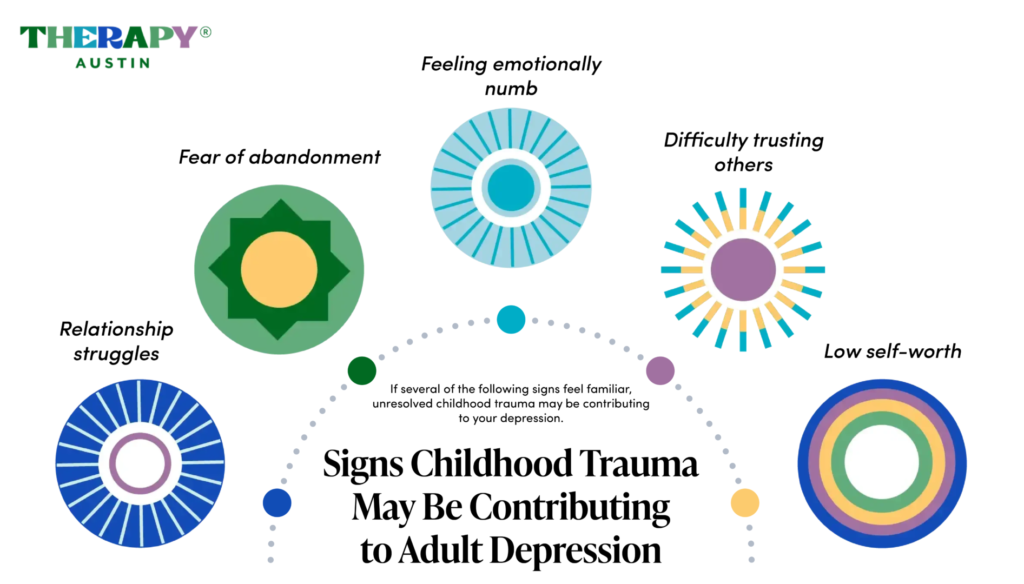
The effects of childhood trauma don’t always disappear with age. Instead, they can shape the way people think, feel, and respond to life’s challenges well into adulthood. While depression is a common outcome of unresolved trauma, it often appears alongside emotional and behavioral patterns that may not seem connected to childhood experiences at first.
If several of the following signs feel familiar, unresolved childhood trauma may be contributing to your depression.
- Feeling emotionally numb: You may struggle to experience joy, excitement, or even sadness, leaving you feeling detached from your emotions and the people around you.
- Low self-worth: Growing up with criticism, neglect, or emotional abuse can lead to deeply rooted beliefs that you’re not good enough or don’t deserve happiness.
- Difficulty trusting others: Early experiences of betrayal, neglect, or inconsistent caregiving can make it difficult to build close, secure relationships.
- Fear of abandonment: You may constantly worry about being rejected or left behind, even in healthy relationships.
- Relationship struggles: Unresolved trauma can make it difficult to communicate, establish healthy boundaries, or feel emotionally secure with others.
Why Childhood Trauma Doesn’t Affect Everyone the Same Way
Not everyone who experiences childhood trauma develops depression. Two people can go through similar experiences yet have very different emotional outcomes as adults. That’s because childhood trauma is only one factor that influences mental health. Genetics, life experiences, supportive relationships, and access to therapy all play a role in how someone responds to adversity and recovers from it.
Several factors can influence how childhood trauma affects mental health, including:
- Supportive relationships: Having a caring parent, teacher, mentor, or another trusted adult can help children build resilience and develop healthy coping skills.
- Environment: A stable, supportive home and access to community resources can reduce the long-term impact of traumatic experiences.
- Timing of trauma: Trauma that occurs during critical stages of brain development or continues over a long period may have a greater effect than a single isolated event.
- Individual resilience: Every person responds to adversity differently. Personal strengths, coping skills, and temperament all influence recovery.
- Early intervention and therapy: Trauma-informed therapy and other evidence-based treatments can help children and adults process traumatic experiences, reducing their impact on long-term mental health.
Therefore, childhood trauma should be viewed as a risk factor, not a life sentence. With the right support and treatment, many people are able to heal, manage depression, and build healthier, more fulfilling lives.
How Therapy Can Help Heal Childhood Trauma and Depression
Healing from childhood trauma isn’t about forgetting the past. It’s about understanding how past experiences continue to shape your thoughts, emotions, relationships, and daily life, then learning healthier ways to move forward. With the right support, many people are able to reduce symptoms of depression, build emotional resilience, and develop healthier coping strategies that improve their overall quality of life.
Because every person’s experiences are different, there is no one-size-fits-all treatment plan. A licensed therapist will take the time to understand your history, current symptoms, and personal goals before recommending an approach that best supports your recovery.
Evidence-based therapies commonly used to treat childhood trauma and depression include:
- Trauma-Informed Therapy: Creates a safe, supportive environment where past experiences can be explored without judgment while helping you develop healthier coping skills and emotional resilience.
- Cognitive Behavioral Therapy (CBT): Helps identify and change negative thought patterns that contribute to depression, replacing them with healthier and more balanced ways of thinking.
- Eye Movement Desensitization and Reprocessing (EMDR): Helps the brain process traumatic memories so they become less emotionally distressing, often reducing symptoms of trauma, anxiety, and depression.
- Mindfulness and Somatic Approaches: Teach practical techniques to regulate the nervous system, increase emotional awareness, and reduce the physical effects of chronic stress and unresolved trauma.
Helping Children and Teens Cope With Trauma
If your own child or teen may be suffering from trauma, helping them develop healthy coping skills early can support their emotional well-being and may help reduce the risk of ongoing mental health challenges as they grow into adulthood. Teaching children and teens healthy ways to process difficult experiences, manage their emotions, and cope with stress can give them valuable tools for the future.
If your teen needs someone to talk to, therapy can provide a safe, supportive space to work through difficult experiences, build healthy coping skills, and develop emotional resilience.
Recovery doesn’t happen overnight, but healing is possible. With compassionate, trauma-informed care, many people gain a better understanding of how childhood experiences have influenced their mental health and learn practical tools to manage depression, strengthen relationships, and build a more hopeful future. Taking the first step toward therapy can be the beginning of lasting change.
Healing Is Possible
Living with depression that stems from childhood trauma can feel overwhelming, but it doesn’t have to define the rest of your life. While you can’t change the past, you can change how it affects you moving forward. With the right support, many people learn to process painful experiences, develop healthier coping strategies, and build stronger, more fulfilling relationships.
If childhood trauma continues to affect your mood, relationships, or daily life, you don’t have to face it alone. Seeking support from a licensed, trauma-informed therapist can help you better understand the connection between your past experiences and current symptoms while providing practical tools for lasting recovery. Healing is a journey, and taking the first step may be one of the most important decisions you make for your mental health.