







Depression can make even the most familiar workday feel exhausting. Tasks that once came naturally, such as answering emails, staying focused in meetings, making decisions, or finishing projects, may suddenly feel overwhelming. You might worry that your productivity is slipping or wonder how long you can keep pushing through while hiding what you’re experiencing. If this sounds familiar, you’re not alone, and learning about effective depression treatment options can be an important first step toward feeling like yourself again at work. Nearly 1 in 12 U.S. adults experiences a major depressive episode each year. Yet many people continue showing up to work every day while quietly struggling with symptoms that others can’t see.
The good news is that there are effective ways to manage depression without sacrificing your well-being or your career. In this guide, you’ll learn practical strategies to cope with depression at work, protect your mental well-being, and recognize when it’s time to seek help.
Signs Depression May Be Affecting Your Work Performance
Depression doesn’t just affect your mood. It can also interfere with your memory, concentration, energy levels, decision-making, and communication. These symptoms often show up at work long before people realize what’s happening. According to a large-scale meta-analysis by researchers at the University of Texas at Austin, depression is associated with meaningful deficits in memory and cognitive functioning, making it harder to focus, retain important details, and stay productive throughout the workday.
Difficulty Concentrating
One of the earliest signs of depression at work is difficulty concentrating. You may experience brain fog, forget important details, struggle to make decisions, or lose focus during meetings. Tasks that once took a few minutes may suddenly require much more time and mental effort.
Decreased Motivation and Productivity
Depression can make it difficult to get started, even on routine tasks. You may procrastinate, miss deadlines, or notice a decline in the quality of your work. These struggles are more common than many people realize. According to the American Psychological Association (APA), in 2024, 76% of U.S. workers reported experiencing at least one symptom of a mental health condition, including difficulty concentrating, anxiety, or depression.
Fatigue and Emotional Exhaustion
Feeling constantly tired is another common symptom of depression. Even after a full night’s sleep, you may feel mentally drained or physically exhausted. Depression can also affect both your mind and body, reducing physical functioning and making everyday work tasks feel more demanding than they should.
Social Withdrawal at Work
Depression may cause you to avoid conversations with coworkers, decline meetings, or isolate yourself from your team. Unfortunately, many people keep these struggles to themselves. Only 13% of employees say they feel comfortable discussing their mental health at work, which can make it even harder to seek support.
Recognizing these signs is the first step. Next is learning practical strategies to help you manage symptoms while maintaining your responsibilities.
8 Practical Ways to Deal With Depression at Work
Managing depression at work isn’t about forcing yourself to push through or pretending everything is okay. Instead, it’s about making small, intentional changes that help you conserve your energy, reduce stress, and stay productive without neglecting your mental health. While these strategies won’t replace professional treatment, they can make your workday feel more manageable and help you regain a sense of control.
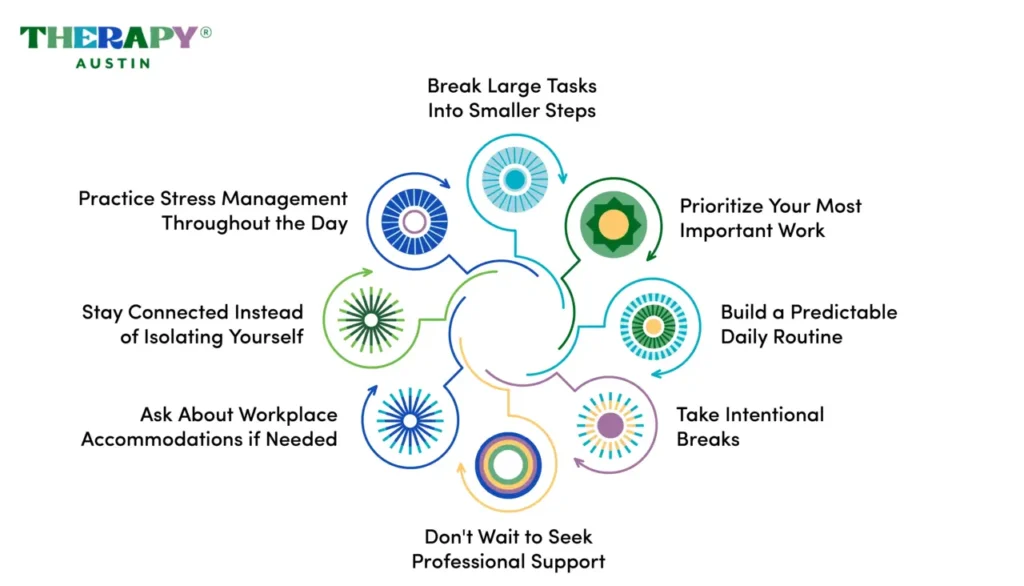
1. Break Large Tasks Into Smaller Steps
When you’re living with depression, even simple projects can feel overwhelming. Looking at a long to-do list may leave you feeling stuck before you’ve even started.
Instead of focusing on the entire project, divide it into smaller, more manageable tasks. Complete one step at a time and allow yourself to acknowledge each accomplishment, no matter how small. Building momentum through small wins can increase motivation and make larger responsibilities feel less intimidating.
2. Prioritize Your Most Important Work
Depression can make it difficult to concentrate and make decisions. Trying to do everything at once often leads to frustration and mental exhaustion.
Start each morning by identifying two or three high-priority tasks. Focus on completing those before moving on to less urgent work. Limiting multitasking and using a simple priority list can help you stay organized and reduce the stress of constantly switching between responsibilities.
3. Build a Predictable Daily Routine
Depression often disrupts motivation and decision-making. Having a consistent routine removes some of the pressure of deciding what to do next.
Aim to begin and end your workday at the same time whenever possible. Schedule regular breaks, eat meals consistently, and create a morning routine that helps you transition into work. A predictable schedule reduces decision fatigue and provides structure during periods of low motivation.
4. Take Intentional Breaks
Working continuously may seem productive, but it can make depression-related fatigue even worse. Short, intentional breaks give your mind an opportunity to reset.
Take a brief walk, stretch your muscles, practice deep breathing, or step outside for a few minutes. Even a five-minute break can improve concentration, lower stress levels, and help you return to your work with greater focus.
5. Practice Stress Management Throughout the Day
Stress can intensify symptoms of depression, making it even harder to stay focused and emotionally balanced.
Simple techniques such as mindfulness, box breathing, grounding exercises, or spending a few minutes journaling during lunch can help calm your nervous system. Practicing these habits throughout the day may improve your ability to manage difficult emotions before they become overwhelming.
6. Stay Connected Instead of Isolating Yourself
Depression often makes people withdraw from others, but isolation can make symptoms worse over time.
If you feel comfortable, stay connected with someone you trust. This could be a supportive coworker, your manager, a close friend, or a family member. Regular conversations and emotional support can remind you that you’re not facing these challenges alone and may help reduce feelings of loneliness.
7. Ask About Workplace Accommodations if Needed
If depression is making it difficult to perform your job, consider whether workplace accommodations could help. Depending on your employer and applicable laws, you may be able to request flexible work hours, a hybrid schedule, a quieter workspace, or temporary adjustments to your workload.
These accommodations are designed to help employees succeed while managing health conditions. If you’re unsure what’s available, consider speaking with your human resources department or supervisor.
8. Don’t Wait to Seek Professional Support
While self-care strategies can help you manage depression from day to day, they may not be enough if your symptoms persist or begin interfering with your work, relationships, or overall quality of life. Seeking professional support can help you address the underlying causes of depression and develop healthier ways to cope with its challenges. Treatment may include psychotherapy, medication, or a combination of both, depending on your individual needs. Cognitive Behavioral Therapy (CBT) is one of the most widely researched and effective treatments for depression, helping people identify unhelpful thought patterns, build healthier coping skills, and improve daily functioning.
Professional treatment doesn’t just improve mental health. It also positively impacts your work performance. A study published in Value in Health found that employees receiving appropriate treatment for depression experienced significant improvements in work productivity after approximately eight weeks. In addition, an economic analysis by the Washington State Institute for Public Policy (WSIPP) estimated that every $1 invested in evidence-based depression care generates about $3 in economic benefits, reflecting improved productivity, reduced absenteeism, and better long-term outcomes.
Seeking treatment isn’t just about feeling better. It’s about giving yourself the support and tools you need to focus more effectively, manage stress with greater confidence, strengthen your relationships, and thrive both at work and in your personal life.
Final Thoughts
Managing depression at work isn’t about pushing through or pretending everything is okay. It’s about recognizing when you need support and taking small, realistic steps to protect your mental health. Simple strategies can help make your workday more manageable, but lasting improvement often comes from addressing the underlying causes of depression.
If your symptoms continue or begin affecting your work, relationships, or daily life, don’t hesitate to seek professional help. Depression is a treatable condition, and effective support is available. If you’re also supporting someone else who may be struggling, our guide on how to support someone struggling with depression offers practical ways to help. With the right treatment and coping strategies, you can improve your mental well-being, regain confidence, and thrive both at work and beyond.