







You know there is something you want to talk about. You may even rehearse a few sentences in your head before your therapy session.
Then you sit down, your therapist asks how you’re doing, and suddenly, you don’t know what to say. You might answer, “I’m fine.” You talk about work, your week, or something that happened on the way to your appointment. Before you know it, the session is over, and you are left wondering why you couldn’t bring up what was really on your mind.
Opening up in therapy can be difficult. You may worry that your therapist will judge you, become emotional when you start talking, or simply struggle to find the right words. These feelings are common, and they do not mean you are doing therapy wrong.
In this guide, we’ll discuss practical ways to make opening up feel easier, from finding the right words to preparing before a session and knowing what to do when you feel stuck, overwhelmed, or unsure of what to say.
Why Is It So Hard to Open Up to a Therapist?
Talking to a therapist is different from most everyday conversations. With friends, family, or coworkers, you can choose what to share and what to keep private. You may even say, “I’m okay,” when you’re not, or change the subject when a conversation gets uncomfortable.
Therapy can bring attention to thoughts, feelings, and experiences you usually push aside. That can feel vulnerable. You may worry that your therapist will judge you, see you differently, or think your feelings are too much.
You may also find it difficult to become emotional in front of someone else. If you’ve spent years trying to hide your sadness, anger, or stress, showing those emotions in therapy can feel unfamiliar.
It can take time to feel comfortable, too. You are getting to know your therapist while deciding how much of your personal life you feel ready to share. You may need a few sessions before you feel safe enough to open up.
Sometimes, you may not even know how to explain what you’re feeling. You might notice a tight chest, tension in your stomach, or a feeling that you want to shut down when a difficult topic comes up.
You don’t need to understand everything before talking about it. You can simply tell your therapist what you’re noticing. That can be a place to start.
Can You Tell Your Therapist That Opening Up Feels Difficult?
Absolutely. In fact, telling your therapist that you are struggling to open up can be a good place to start.
You don’t have to explain everything right away. You can simply say:
- I don’t know where to begin.
- I’m having a hard time talking about this.
- I’m worried you’ll judge me.
- I want to talk about something, but I don’t know how to start.
- I was going to talk about this today, but now I don’t want to.
You don’t need to have the perfect words. Telling your therapist you’re struggling gives them a chance to slow down, ask questions, and help you find a way into the conversation that feels more comfortable.
Sometimes, saying I don’t know how to talk about this is enough to get the conversation started.
8 Ways to Make Opening Up in Therapy Easier
Opening up doesn’t always come easily, especially when you’re trying to talk about something personal, painful, or difficult to explain. You may know what you want to say but struggle to get the words out once you’re sitting in the session.
There is no single right way to open up. Try different approaches and see what helps you feel more comfortable talking with your therapist.
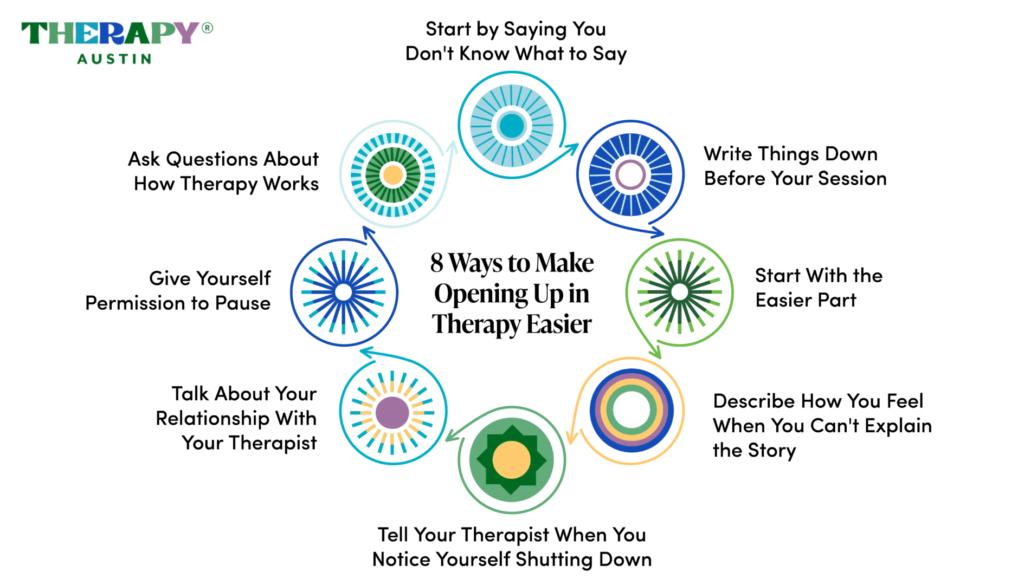
1. Start by Saying You Don’t Know What to Say
If you’re struggling to find the right words, you can simply say that.
I wanted to talk about something, but I don’t know how to say it.
That is a perfectly good place to begin. Your therapist may ask what makes the topic difficult or what you notice when you try to talk about it.
You might feel nervous, embarrassed, disconnected, or suddenly want to change the subject. Talking about those reactions can help you understand what makes it difficult to open up.
2. Write Things Down Before Your Session
It can be hard to remember everything you want to discuss once your session begins. Writing a few things down beforehand can give you something to refer to if your mind goes blank.
You don’t need to write a full journal entry. A few words or sentences are enough.
You might write:
- Something happened with my family that I want to talk about.
- I’ve been feeling angry, but I don’t know why.
- I want to talk about something from my past.
- I’ve been avoiding something.
- I’m worried about what my therapist will think.
If you’re worried you won’t be able to say it out loud, you can tell your therapist:
I wrote this down because I was afraid I wouldn’t be able to say it.
A few notes can make it easier to start the conversation.
3. Start With the Easier Part
You don’t have to begin with the most painful or difficult part of your story.
For example, if you’re dealing with a difficult relationship, you might start by talking about something that happened recently. Once you feel more comfortable, you can share more about what has been happening.
Opening up can happen gradually. Starting with something that feels easier can help you get used to talking about the topic before going deeper.
4. Describe How You Feel When You Can’t Explain the Story
Sometimes you may know how something makes you feel without knowing how to explain why.
You can start with the feeling instead.
- When I think about it, I feel overwhelmed.
- This brings up a lot of anxiety for me.
- I’m angry, but I don’t really understand why.
- This is difficult for me to talk about.
You can also describe what you notice in your body. Maybe your chest feels tight, your shoulders tense up, or you feel like shutting down when the subject comes up.
You don’t need to have a complete explanation before you start talking. Describing what you feel or notice can give your therapist a place to begin with you.
5. Tell Your Therapist When You Notice Yourself Shutting Down
Sometimes you may notice yourself pulling away from a difficult conversation. You might change the subject, make a joke, or suddenly decide that what you were going to say isn’t important.
If you notice this happening, try naming it.
I think I’m changing the subject because I don’t want to talk about this.
You don’t have to force yourself to continue talking about it. Simply noticing the reaction and sharing it with your therapist can be helpful.
Over time, you may become more aware of the moments when you avoid something that feels difficult to discuss.
6. Ask Questions About How Therapy Works
Opening up can feel harder when you don’t know what will happen after you say something.
It’s okay to ask your therapist questions about the process. For example:
- What happens if I don’t know what I want to work on?
- Can I take some time before talking about something?
- What do you usually do when someone feels overwhelmed during a session?
Knowing what to expect can make therapy feel less uncertain. It can also help you understand how your therapist approaches difficult conversations.
If you’re still looking for a therapist, you can also ask questions about their communication style and approach before choosing someone. Finding a therapist you feel comfortable with can make it easier to build trust over time.
7. Give Yourself Permission to Pause
Opening up doesn’t mean you have to talk continuously throughout your session. You can slow down when a conversation starts to feel overwhelming.
You can:
- Take a breath.
- Sit quietly for a moment.
- Say I need a second.
- Tell your therapist that’s all I can talk about right now.
You are allowed to pause and decide what you are ready to discuss. Taking a break from a difficult topic does not mean you have failed to make progress.
8. Talk About Your Relationship With Your Therapist
If you don’t feel comfortable with your therapist, opening up can become even harder.
Maybe something your therapist said didn’t sit right with you. You may feel misunderstood or worry that your therapist is frustrated with you. Instead of keeping those feelings to yourself, you can bring them into the conversation.
You might say:
After our last session, I didn’t feel comfortable.
Or:
I’m finding it difficult to talk about this with you.
You don’t have to pretend that everything feels perfect for therapy to be helpful. Talking openly about what isn’t working can sometimes help you and your therapist understand each other better.
If you continue to feel uncomfortable or don’t feel heard, it may also be worth considering whether another therapist would be a better fit.
What If You Cry, Freeze, or Go Blank?
One thing that can make opening up feel difficult is worrying about how you will react once you start talking. You might cry, lose your train of thought, or suddenly feel like you can’t find the words.
If that happens, you can tell your therapist what you’re experiencing:
- I lost my train of thought.
- I’m feeling overwhelmed.
- I know what I want to say, but I can’t get the words out.
- I need a moment.
You don’t have to apologize for crying or force yourself to keep talking. Take a breath and give yourself a moment. Your therapist can help you slow down and decide what feels manageable to discuss.
Getting emotional, pausing, or losing your words doesn’t mean you’re doing anything wrong. These moments can happen when you’re talking about something that feels difficult or personal. You can take your time and return to the conversation when you feel ready.
Do You Have to Tell Your Therapist Everything?
No. You don’t have to share everything with your therapist right away. Some things may take time to talk about, and you may need several sessions before you feel ready.
You can also tell your therapist when you’re not ready:
There’s something connected to this that I’m not ready to talk about yet.
You can set boundaries around what you’re comfortable discussing. At the same time, if something is affecting your mental health or the concerns you’re working on in therapy, letting your therapist know that it exists can help them better understand what you’re experiencing, even if you’re not ready to share all the details.
Opening up is a gradual process. You don’t have to tell your whole story to make progress.
What If You Don’t Feel Comfortable With Your Therapist?
Sometimes, opening up is difficult because the topic itself feels vulnerable. Other times, you may not feel comfortable with the therapist you’re talking to.
Maybe something your therapist said didn’t sit right with you. You may feel misunderstood, worry about being judged, or feel like your concerns aren’t being heard.
Pay attention to how you feel during and after your sessions. Ask yourself:
- Do I feel listened to and respected?
- Can I tell my therapist when I’m not ready to discuss something?
- Do I feel comfortable asking questions or disagreeing?
- Do I feel like my therapist understands what I’m trying to say?
If something doesn’t feel right, you can bring it up with your therapist. Talking about what makes you uncomfortable may help improve the relationship.
You can also look for a different therapist if the relationship still feels uncomfortable. Finding someone whose communication style and approach work well for you can make it easier to feel safe enough to open up.
Changing therapists doesn’t mean therapy has failed. Sometimes, finding the right fit is part of the process.
You Don’t Have to Find the Perfect Words
You don’t need to know exactly what to say before your next therapy session. You may feel nervous, lose your train of thought, or struggle to explain what is going on. That’s okay.
Start with what feels possible. Write down a few thoughts before your session, talk about how you’re feeling, or simply tell your therapist that you’re having a hard time opening up.
You don’t have to tell your whole story in one conversation. With time, patience, and a therapist you feel comfortable with, opening up can become easier.
If you’re looking for a therapist who can meet you where you are, Therapy Austin can help you find a therapist who fits your needs, preferences, and goals.