







When starting therapy, it’s natural to have questions like: How long will it take before I start feeling better? How many sessions will I need? When should I expect to notice changes in my thoughts, emotions, or behavior?
The answers depend on several factors, including what brings you to therapy, your treatment goals, and the type of support you’re receiving. Some people experience relief after their first session, while others need several weeks or months to notice meaningful improvements. In many cases, progress happens gradually as you better understand your emotions, recognize unhelpful patterns, and learn healthier ways to cope with everyday challenges.
Understanding how long therapy typically takes is a good starting point, but knowing what progress looks like along the way matters just as much. In this guide, we’ll review what research says about therapy timelines, what to expect during your first few sessions, and how improvement may develop over time.
How Long Does It Take for Therapy to Work?
Therapy doesn’t produce the same results for everyone. Some people may feel relief after their first session, while others need several weeks before noticing meaningful changes. Early progress often involves understanding your emotions, recognizing recurring patterns, and learning healthier ways to respond to difficult situations.
Research offers some insight into how improvement develops over time. A study published in American Psychologist examined data from more than 2,400 patients across 15 studies and found that approximately 50% showed measurable improvement after eight therapy sessions, increasing to around 75% after 26 sessions.
The American Psychological Association (APA) also reports that an average of 15–20 sessions is needed for approximately 50% of patients to recover, based on self-reported symptom measures. Some specific evidence-based treatments have shown clinically significant improvements within 12–16 weekly sessions, although others may require longer treatment.
However, these figures reflect general research findings, not a fixed timeline for everyone. It’s also important to distinguish between early relief and lasting improvement. You might feel less anxious after discussing a difficult situation, but changing long-standing behaviors, developing healthier coping strategies, and addressing underlying concerns can take considerably longer.
So, what does this mean if you’re starting therapy? You don’t necessarily need to feel significantly better after your first few appointments. Instead, look for gradual changes in how you understand your emotions, respond to challenges, and manage everyday situations. Your therapist can also help you review your progress and adjust your treatment goals as needed.
These research findings provide a general picture of therapy timelines, but they don’t explain what happens during sessions. To understand how progress may develop in practice, let’s look at what you can typically expect during your first 12 therapy sessions.
What to Expect as You Progress Through Therapy
Research can give you an idea of how many sessions people may need, but what actually happens during therapy? The process typically begins with understanding your concerns and establishing treatment goals. As you get more comfortable with your therapist, sessions may focus on exploring recurring patterns, developing coping strategies, and working through challenges in your everyday life.
Although the process varies depending on your needs and treatment approach, the following breakdown offers a general idea of what you might experience during your first several sessions and beyond.
Sessions 1–2: Getting to Know Your Therapist and Setting Goals
Your first one or two sessions typically focus on building a relationship with your therapist and discussing what brought you to therapy.
Your therapist may ask about your personal history, current challenges, relationships, emotional well-being, and previous experiences with mental health treatment. They’ll also work with you to identify the concerns you want to address and set realistic treatment goals.
You may not notice significant emotional changes at this stage, and that’s perfectly normal. These initial conversations help your therapist understand your situation and develop an approach that addresses your needs.
By the end of these sessions, you may have a clearer understanding of what you’re experiencing, what you’d like to change, and how therapy can help you work toward those goals.
Sessions 3–4: Exploring Thoughts, Emotions, and Experiences
Once your therapist better understands your concerns, sessions may begin exploring the thoughts, emotions, experiences, and behaviors connected to them.
You might discuss difficult memories, relationship challenges, recurring worries, or situations that trigger certain emotional responses. Your therapist may also help you understand how past experiences or deeply held beliefs shape how you respond to everyday situations.
These conversations can sometimes bring uncomfortable feelings to the surface. You might feel emotionally drained or temporarily more distressed, particularly when discussing experiences you’ve previously avoided or struggled to understand.
This doesn’t automatically mean therapy isn’t working. Your therapist can help you explore difficult emotions at a manageable pace and support you as you work through them.
Sessions 5–6: Identifying Unhelpful Patterns and Learning Coping Strategies
As you begin understanding your thoughts and emotional responses, therapy may shift toward identifying patterns that contribute to your difficulties.
For example, you might recognize situations that trigger your anxiety, understand how certain beliefs influence your decisions, or identify behaviors that contribute to ongoing stress.
Your therapist may also introduce practical techniques to help you respond differently. Depending on your needs, these might include challenging unhelpful thoughts, managing emotional reactions, setting boundaries, or practicing relaxation techniques.
You may begin noticing small improvements, such as feeling more in control during stressful situations or recovering more quickly after an emotional setback. These changes may not happen consistently, but they can indicate that you’re beginning to apply what you learn in therapy.
Sessions 7–12: Practicing New Skills in Everyday Life
As therapy continues, the focus often shifts toward applying the strategies and insights you’ve developed outside your sessions.
You may begin responding differently to situations that previously caused anxiety, communicating more effectively in relationships, or managing difficult emotions with greater confidence.
Your therapist may encourage you to practice specific techniques between appointments and discuss your experiences during subsequent sessions. This helps you identify what works, where you’re still struggling, and what needs further attention.
You may notice more meaningful improvements during this period, although progress isn’t always consistent. For example, you might become better at managing anxiety at work while continuing to struggle with certain relationship challenges.
The aim is to help you use these new skills more consistently and gradually incorporate healthier responses into your everyday life.
Session 13 and Beyond: Strengthening Progress and Planning for the Future
As you make progress toward your treatment goals, therapy may focus on strengthening the changes you’ve made and preparing you to manage future challenges.
You and your therapist can review your progress, identify situations that may trigger old patterns, and develop strategies for handling setbacks. Depending on your needs, you may also create a plan for maintaining your progress after therapy ends.
Some people feel ready to finish treatment at this stage. Others benefit from continuing therapy to address deeper concerns, work toward additional goals, or maintain their progress.
Please do remember, these stages are illustrative, not a prescribed treatment schedule. You might work through some earlier, spend more time on particular concerns, or progress in a different order.
How Long Does Therapy Take for Different Mental Health Conditions?
As you progress through therapy, the time it takes to notice improvements can depend on what you’re working through. Someone seeking support for everyday stress may benefit from a shorter course of therapy, while someone experiencing persistent anxiety, depression, or trauma-related symptoms may need more time and ongoing support.
The type of therapy also matters. Some evidence-based approaches follow structured treatment plans with a defined number of sessions, while others are more flexible and adapt to your needs as treatment progresses.
But progress isn’t always steady. Even with appropriate treatment, some sessions can feel harder than others. You may experience uncomfortable emotions, temporary setbacks, or increased distress as you begin working through challenging experiences.
Understanding why this can happen is an important part of knowing what to expect from therapy.
Why Can You Feel Worse Before You Feel Better in Therapy?
Starting therapy doesn’t always mean you’ll feel better immediately. Some people experience increased anxiety, sadness, frustration, or emotional exhaustion during their first few sessions. This can happen as you begin discussing difficult experiences, exploring painful memories, or recognizing patterns you’ve struggled with for years.
There are several reasons why therapy may initially feel uncomfortable:
1. Exploring difficult emotions and experiences
Talking about painful memories, relationship problems, or unresolved experiences can bring up emotions you may have avoided. Although these conversations can be difficult, they may help you understand how past experiences influence your current thoughts and behaviors.
2. Becoming more aware of unhealthy patterns
Therapy can help you recognize thought patterns, emotional triggers, and behaviors that contribute to your difficulties. However, awareness doesn’t mean you can change these patterns immediately. It may take time and practice to develop healthier responses.
3. Experiencing temporary setbacks
Progress in therapy isn’t always consistent. You might feel more confident after one session but experience anxiety or emotional distress again the following week.
Research supports the idea that temporary setbacks can occur during treatment. A study involving 1,763 patients receiving cognitive behavioral therapy (CBT) found that 26.5% experienced at least one sudden increase in psychological distress during treatment. These temporary increases did not necessarily mean that treatment was unsuccessful.
4. Adjusting to new ways of thinking and behaving
Changing familiar habits, setting boundaries, or responding differently to stressful situations can feel uncomfortable at first. You may need time to practice new coping strategies before they begin to feel natural.
Remember that feeling worse isn’t automatically a sign that therapy is working. If your symptoms continue to worsen, affect your ability to manage daily activities, or make you feel unsafe, discuss your concerns with your therapist promptly. They can help assess your progress and determine whether your treatment approach needs adjustment.
The goal of therapy is to help you make meaningful improvements, not to make you feel uncomfortable indefinitely.
How Can You Make the Most of Therapy?
Getting the most out of therapy involves more than attending your scheduled sessions. The effort you put into the process, both during and between appointments, can help you make meaningful progress.
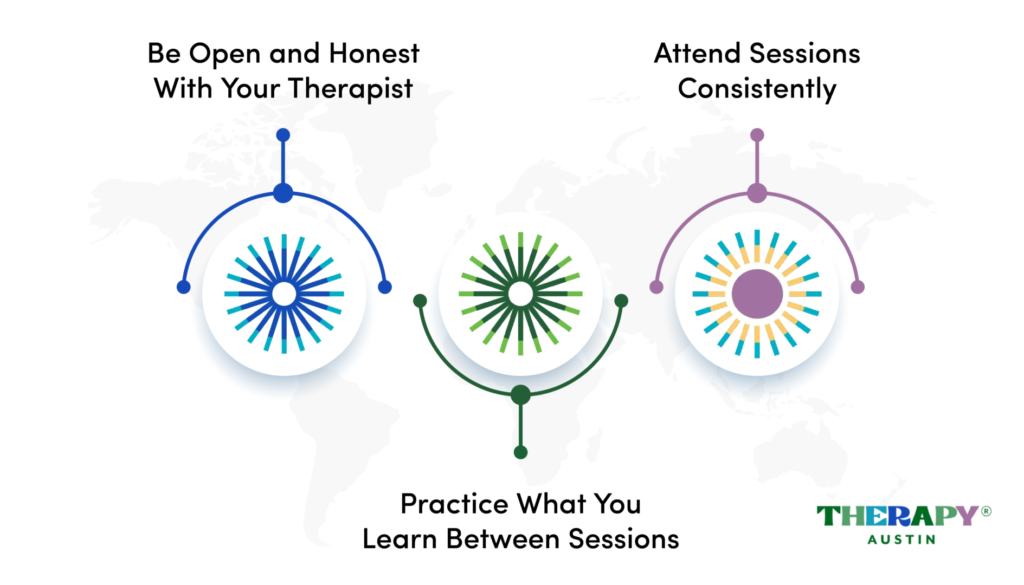
Here are three ways to get more out of your therapy sessions:
1. Be Open and Honest With Your Therapist
Share your thoughts, feelings, and concerns as openly as you can, even when certain topics feel uncomfortable. Let your therapist know if something isn’t working, if you disagree with their suggestions, or if you’re struggling to apply what you’ve discussed. Honest communication helps them understand your needs and adjust their approach.
2. Practice What You Learn Between Sessions
Apply the coping strategies and techniques discussed in therapy to everyday situations. Your therapist may suggest journaling, practicing relaxation techniques, tracking emotional triggers, or trying different ways to respond to stressful situations. Regular practice can help you turn these strategies into habits.
3. Attend Sessions Consistently
Try to follow the schedule your therapist recommends. Regular appointments help maintain momentum and give you opportunities to discuss challenges, review your progress, and build on previous sessions. If you need to miss an appointment, discuss how to maintain continuity in your treatment.
Remember, therapy is a collaborative process. Your therapist provides guidance and support, but your active participation helps turn what you learn in sessions into meaningful changes in your everyday life.
Final Thoughts
Therapy doesn’t follow a fixed timeline. Some people begin noticing improvements within a few sessions, while others need several months or longer to work through their concerns. Your progress depends on your individual needs, treatment approach, and the goals you’re working toward.
Rather than focusing on how quickly you should feel better, pay attention to the small changes you’re making along the way. Understanding your emotions, developing healthier coping strategies, and responding differently to challenging situations are all meaningful signs of progress.
If you’re considering therapy, start by finding the right therapist. Therapy Austin supports individuals, couples, teens, and families as they navigate life’s challenges and work toward better mental health.
Explore Therapy Austin’s services and take the first step toward getting the support you need.