







Emma’s alarm goes off at 6:30. Before she sits up, her phone is in her hand. She checks the time, messages, email, and social media, then closes one app and opens the same one again. The phone stays beside the sink while she gets ready and comes out at every crossing on her walk to work. At the elevator, she is looking again. Her day has barely begun, but no pause has lasted ten seconds without a screen.
At her desk, Emma reaches for the phone while a file loads, after sending an email, and whenever a task becomes difficult. When a coworker tells her a story, the screen lights up and she misses the ending. At lunch, she plans to take a proper break, but she scrolls between bites and looks down to find most of the food gone. The break is over, yet she never felt away from work.
That evening, every lull at a gathering with friends pulls Emma back to the screen. One friend finally asks, “Were you listening?” When she gets home, she tells herself she will scroll for a few minutes before making dinner. Nearly an hour passes. Her neck is stiff, the room has grown darker, and she feels more drained than before. Still, when she puts the phone down, the silence feels heavy. Her hand reaches back before she decides to pick it up.
This is what troubles Emma: her phone interrupts her work, meals, walks, and conversations, yet she depends on it whenever nothing else is happening. It is no longer just something she uses. It is where her attention goes before she can choose where she wants it to go. By bedtime, she wants relief from the screen, but she no longer knows how to settle without it.
Why Phone Checking Becomes Automatic
Emma’s example shows how the habit of looking at a phone can become a negative habit. Your own day may look different, but the pattern may feel familiar. You may find that you finish a task, or there’s a lull in a conversation, but before you decide what you want, your phone is already open.
A quick check gives the pause an immediate ending. Waiting becomes scrolling. Effort becomes a distraction. An uncomfortable thought gives way to a message, video, or update. With enough repetition, the pause itself can begin to prompt the reach.
This is why you might close an app and reopen it moments later. Like Emma, you may be following a familiar movement rather than looking for something specific.
Each check may seem too small to matter. Across a day, those checks can divide your attention, interrupt conversations, follow you through meals, and keep your mind active during breaks. Understanding why you reach is only the first part. When the screen is removed, the pause remains, and it may not feel restful yet.
Why Phone-Free Rest Can Feel Uncomfortable
Putting your phone down does not instantly create relaxation. You may notice unfinished tasks, boredom, tension, or thoughts that scrolling kept in the background. You may also expect something new to appear on the screen.
The contrast can make quiet feel worse at first. Your phone provided stimulation and a predictable next action. Without it, moving from a busy state into a slower one can feel unfamiliar.
For Emma, this begins when she first starts intentionally leaving her phone in her purse while she eats lunch. Within a minute, she wonders whether someone replied, thinks about work, and walks back to check. She can relax, but removing the screen has not yet given her another way to enter the quiet.
The first goal does not need to be an entire phone-free evening. Begin with one short, predictable pause that already has something gentle to hold your attention. Once it feels manageable, you have something real to build on.
Practical Steps for Relaxing Without Your Phone
These steps do not ban your phone or ask you to endure as much discomfort as possible. They create one repeatable chance to notice the urge, remain with the moment, and learn what helps you settle.
Emma uses the first five minutes of lunch because the meal holds her attention and the break has a clear endpoint. Your moment may be different. Start somewhere easy to repeat, then let each step prepare you for the next.
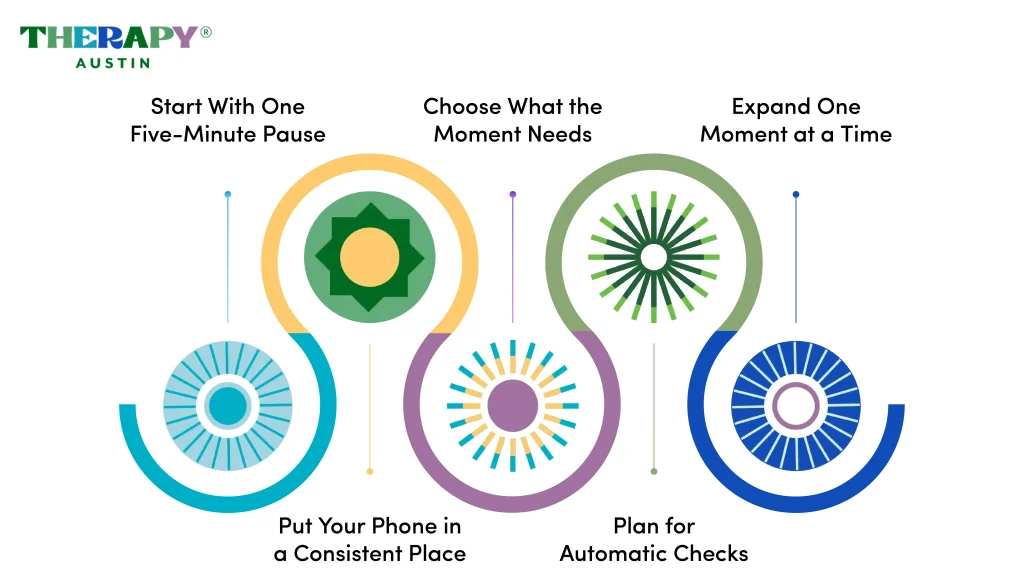
Start With One Five-Minute Pause
Choose one moment that happens most days. The first five minutes of a meal, a short walk, or the first few minutes at home. Decide when it begins and ends so you do not keep negotiating with yourself.
Emma’s five minutes are her lunch break. The time feels longer than expected. She reaches toward her bag twice, then slows down, takes a drink, and looks outside. Nothing remarkable happens, but she experiences part of her break instead of scrolling through it. This is about being intentionally mindful: embrace the calm and allow your mind to be still.
Put Your Phone in a Consistent Place
Before the pause, put the phone in a bag, in a drawer, on a shelf, or plugged into a charger, rather than leaving it in your hand or within direct line of sight. Keep the sound on if you need to remain available.
Emma’s approach is to put her phone in her bag before she sits down to eat. Later, she put it on the kitchen counter while completing a task at home, and leaves it charging at her desk rather than carrying it between rooms. The phone remains available, but reaching it now requires a deliberate action.
That distance is not a test of discipline. It gives you time to notice the reach and ask what you expected the phone to provide.
Choose What the Moment Needs
When you want to check, ask, “What am I hoping to get from my phone right now?” You may want relief, contact, stimulation, information, or distance from an uncomfortable thought.
Choose something that directly addresses the need. For connection, speak to someone or send one intentional message. For mental fatigue, eat slowly, make tea, or listen to music. For stimulation, try movement, a book, or something with a natural stopping point.
Emma discovers that lunch needs to feel separate from work, so she eats more slowly and looks out the window. Her walk home needs to help her leave the office behind, so she pays attention to the route. At home, changing clothes and making dinner help her arrive before she decides whether she wants the screen.
A fitting alternative makes the pause easier, but it will not erase the habit immediately. You still need a response for the next automatic check.
Plan for Automatic Checks
Expect to forget sometimes. You may respond to a message, open another app, and return to the first app without noticing. Treat that moment as practice, not proof that the plan failed.
When you notice, put the phone back and ask what you wanted from it. Then return to the meal, the walk, the conversation, or the quiet moment. You do not need to wait until tomorrow or create a stricter rule.
Emma uses this repair after losing several minutes to her phone during lunch. She also uses it when she glances down while someone is speaking or starts scrolling automatically on the couch. Each return makes the chosen pause more familiar. When that first pause no longer requires all her attention, she is ready to extend the practice.
Expand One Moment at a Time
Keep the first pause and add one more recurring moment. After lunch, you might add a short walk. After a quiet moment at home, you might try one meal or conversation. Expand slowly enough that the change fits your life.
After two weeks, Emma keeps her lunch pause and adds a short walk after work. Later, she leaves the phone alone when someone is speaking, keeps it away from the dinner table, and checks it during a natural break at a gathering instead of during every silence.
Expanding slowly lets each new moment rest on something you can already do. As those moments accumulate, less of your day is decided by an automatic check, leaving more room for rest, attention, and connection.
What More Intentional Phone Use Can Look Like
Relaxing without your phone does not require rejecting it. You can still answer messages, watch videos, and scroll. The change is having enough space between the urge and the screen to recognize a choice.
Emma still uses her phone every day, and she still catches herself reaching automatically. Now she notices more often, puts it down, and returns to the person or activity in front of her. She tastes her food, hears a friend’s whole story, and gives herself time to leave work behind.
Your version of that change may begin with only five minutes. Those minutes matter because they teach you that a pause does not have to be escaped. As they become easier to stay in, quiet can stop feeling like a problem your phone has to solve.
When to Seek Help
The steps above are intended for ordinary automatic checking. Extra support may be useful if phone use repeatedly interferes with sleep, work, relationships, meals, or daily responsibilities, or if trying to put the phone down brings distress that feels difficult to manage alone.
You do not need to decide whether your phone use qualifies as an addiction before asking for help. A more useful question is whether the pattern is making important parts of your life harder and whether your own attempts to change it have been enough.
A therapist can help you understand what the phone is providing, what makes it difficult to stop, and whether anxiety, loneliness, work pressure, or another concern is contributing to the pattern. From there, you can build a plan that addresses more than the screen itself. At Therapy Austin, we offer individual therapy for people who want that support.